


Again Shippers’ Council rebuffs shipping lines over tariff hike
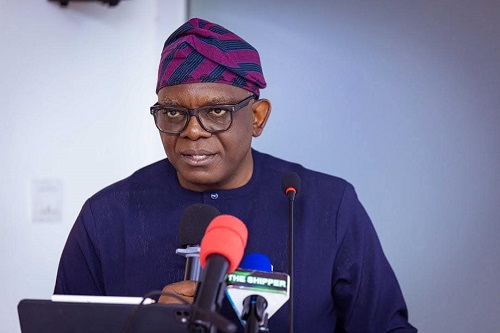
ES/CEO, NSC, Dr Pius Akutah.
The Nigerian Shippers’ Council NSC, has convened a crucial meeting with shipping companies, freight forwarders, importers, and exporters, emphasising the need for comprehensive stakeholder engagement before the implementation of the proposed tariff increment by shipping companies.
Recall that the Council had in January, directed all shipping companies, shipping agents, and terminal operators in Nigerian ports to suspend and refrain from implementing any review or upward adjustment of their charges until they have fully engaged their stakeholders. The Council had last Month reinforced this position once again, thus foreclosing any upward review in tariff.
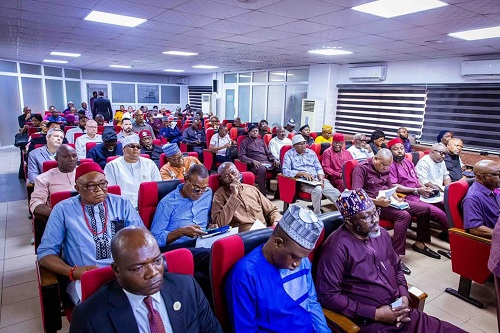
A cross section of participants at the forum in Lagos
Speaking at the one-day stakeholders’ forum on the proposed increment, the Executive Secretary/CEO, of the Council, Dr. Akutah Pius, MON said the earlier suspension of the tariff implementation in March 2026 was a deliberate move to allow for broader consultations across the maritime value chain.
He stressed that implementation of the new tariff would only commence after shipping companies conclude engagements with importers, shippers, clearing agents, and other critical stakeholders.
Akutah assured that the approved 30per cent tariff increase would not destabilize the economy, explaining that it represents a ceiling rather than a fixed rate.
“Today’s engagement was productive. The suspension of the tariff implementation last month created room for us to interact with stakeholders and address key concerns.
The 30per cent increase is the upper limit; shipping companies may implement 10 or 20% depending on the outcome of their consultations. It will be gradual,” he said.
He emphasised that the adjustment would not come as a shock to the economy, noting that some shipping companies had already commenced consultations and partial implementation.
The NSC boss also disclosed that earlier tensions were partly linked to the actions of a particular operator.
He further explained that while shipping companies had proposed increases ranging between 150 and 200per cent, the Council settled for 30% to strike a balance between industry sustainability and economic stability.
“Shipping companies argued that 30per cent is too low given inflation and rising operational costs, but we determined it was sufficient to avoid overburdening the economy,” he said.
According to him, the Council considered prevailing economic realities, including recent wage adjustments in the sector, before approving the increment.
He reiterated that tariff adjustments are not intended for excessive profit-making but to ensure the sustainability of the sector without placing undue pressure on the wider economy.
“We need shipping companies to operate efficiently, but we cannot allow increases that could strain the entire system. The goal is to maintain balance,” he added.
Stakeholders at the meeting echoed the need for proper consultation before any tariff adjustments are implemented. While acknowledging the necessity of the increase due to current economic realities, they criticized the lack of prior engagement.
President of the National Shippers’ Association of Nigeria NSAN, Dr. Jamilu Umar said stakeholders were not opposed to the increment itself but to the process.
“We are not against the increase, but due process must be followed. There must be proper consultation, and all stakeholders must be carried along,” he said.
The Manufacturers Association of Nigeria MAN, echoed similar concerns, urging that shipping companies be mandated to consult stakeholders before implementing any adjustments.
Also speaking, President of the Shipping Association of Nigeria SAN, Boma Alabi, attributed the tariff hike to prevailing economic challenges, noting that the approved 30per cent increase fell short of industry expectations.
“The 30per cent approved is not entirely commercial. We initially proposed over 100per cent, but this reflects current realities. Shipping companies are also contending with rising costs, including a minimum wage of N200,000 in the subsector,” she said.
Alabi called for sustained collaboration among stakeholders to build a more competitive and value-driven maritime industry.
Stakeholders present at the meeting included the Association of Nigerian Licensed Customs Agents ANLCA, National Association of Government Approved Freight Forwarders NAGAFF, Association of Registered Freight Forwarders of Nigeria AREFFN, Ndigbo Amaka Progressives Market Association, Manufacturers’ Association of Nigeria MAN, National Council of Managing Directors of Licensed Customs Agents NCMDLCA, Africa Association of Professional Freight Forwarders and Logistics APFFLON, and the West Africa Exporters Association, among others.


Leave a Reply