


Abubakar Dantsoho: A metaphor for Nigeria’s port industry transformation
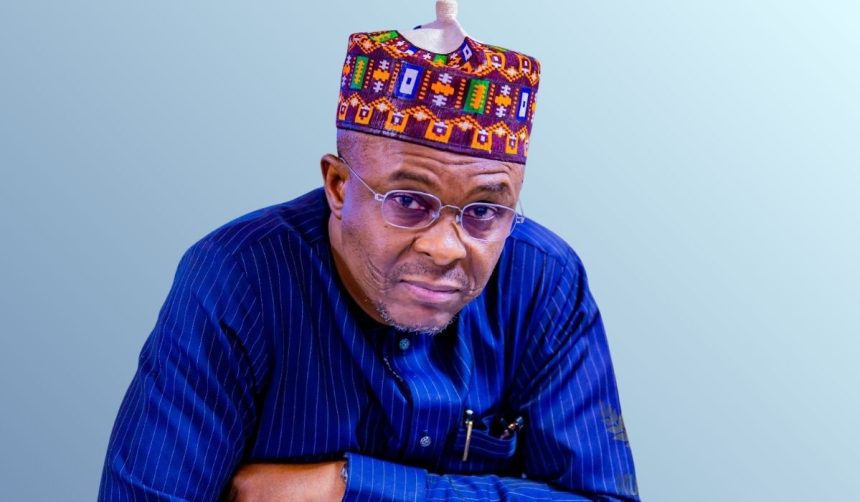
Managing Director, Nigerian Ports Authority NPA, Dr. Abubakar Dantsoho.
When in 1993, the young Abubakar Dantsoho was posted to the Nigerian Ports Authority NPA, under the mandatory National Youth Service Corps NYSC scheme, little did he know that he had an appointment with history; emerging the Managing Director/CEO of the Authority and a metaphor to transform Nigeria’s seaports 32 years later. Francis Ezem, reports.
Abubakar Dantsoho is no doubt, a child of an uncommon destiny. This is considering the chain of events over the past three decades, that have culminated in his emergence as the helms man of Nigerian Ports Authority NPA, an organisation he joined as a member of the NYSC. Born in Jalingo in present day Taraba State, Dr. Abubakar Dantsoho as he is presently called, cut his teeth in the NPA as a member of the NYSC in 1993 and through a combination of hard work and divine guidance, he rose to the position of the Managing Director/CEO of the NPA.
Appointed by President Bola Ahmed Tinubu on July 12, 2024, his appointment can be likened to the popular phrase ‘when opportunity meets preparedness’, as he has over the years adequately prepared himself even when he expected nothing, which typifies him as a man constantly in search of knowledge.
Just for the records, Dantsoho holds a doctorate in Maritime Technology from Liverpool John Moores University and a Master’s in International Transport from Cardiff University of Wales. He has worked on key consultancy projects, including the 25-Year Ports Development Masterplan and World Bank studies on private sector participation. This is in addition to his extensive experience within the NPA, serving as Assistant General Manager, Port Manager (Onne Port), and in Tariff and Billing as well as roles as Technical Assistant to the Managing Director of the NPA and Chief of Staff to the Minister of Transport, Mu’azu Jaji Sambo, during which he leveraged his wealth of experience and commitment to innovation in Nigeria’s transport sector. Working under the direct supervision of the Hon. Minister of Marine and Blue Economy, H.E. Adegboyega Oyetola, Dantsoho has no doubt made the President, who appointed him proud, same has he done for the nation, which he serves.
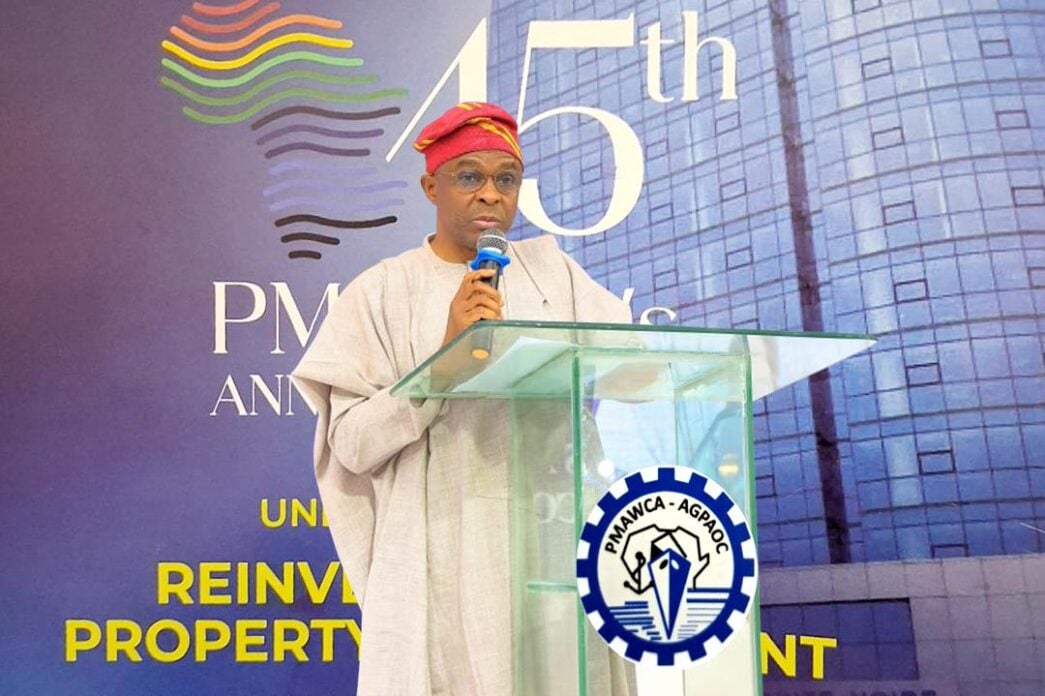
*Dr. Dantsoho doubles as President of the Port Management Association of West and Central Africa PMAWCA, the first Nigerian to head the regional body since its formation in October, 1972.
With over 25 years of cognate experience in the maritime industry, Dantsoho has garnered expertise in areas such as maritime technology, ports management and operations, logistics, business and strategic planning, project management, and research, among several others. It is therefore evident that he has traversed through the entire length and breadth of the port industry both locally and internationally, which accounts for the huge experiences he has garnered in the process. It is also instructive to note that Abubakar Dantosoho has seen it all, especially in terms of the developmental stages of Nigeria’s port industry from 100 per cent manual port operation to the current stage of digitisation.
For instance, when he joined the NPA in 1993 as a Youth Corps member, Nigeria operated a manual port system when the NPA was both a terminal operator and a self-regulator. This period, which was described as ‘long room era’, characterised by very lengthy clearing processes, was fraught with several operational, transport and logistic challenges, as turnaround time for vessels that call at the nation’s seaports was over 21 days while cargo dwell time was over three months with the attendant massive vessel and cargo congestion. Dantsoho also witnessed the Port Concession era, which saw the NPA transform into a technical regulator, having yielded its cargo operations functions to private terminal operators, who came with lots of expertise, equipment and investments.
Little wonder he has done so well in the short period he has been on the stead, providing transformational leadership at the NPA, especially in terms of revamping old port infrastructure, installing more modern and globally accepted ones, aggressively pursuing the digitisation of port operations and also pursuing the Port Community System PCS, in affiliation with the International Maritime Organisation IMO, which has provided the basis for Nigeria’s attainment of National Single Window NSW status, which has become the game changer for the efficiency and global competitiveness of Nigeria’s seaports.
Dantsoho is the Vice President of the Tokyo, Japan based the International Association of Ports and Harbors IAPH.
Specifically, as part of measures to enable the ports attain the level of efficiency he has desired, the Abubakar Dantsoho-led management of the NPA embarked on an ambitious port infrastructural renewal and an equally high- scale port automation and digitisation across all locations.
For instance, the NPA management under the close supervision of the Honourable Minister of Transport, Adegboyega Oyetola kicked off the reconstruction of the collapsed quay apron of the Tin Can Island Port Complex, Apapa to enhance efficiency and competitiveness and ultimately boost revenue.
Dantsoho and his team have also been intentional in driving the seaport infrastructure revamping and modernisation agenda towards addressing the several years of gross underutilisation of the Delta Ports Complex, which is made up of Warri and Koko Ports. To achieve this, Dantsoho undertook the ambitious project of dredging of the crucial Escravos Channel, which restored the navigational depth necessary for commercial confidence. This is also in addition to commissioning the Escravos and Ramos Signal Stations, which introduced a modern vessel traffic management system that provides world-class oversight and safety for the increased maritime traffic navigating the Delta’s complex waterways.
The NPA-boss further acquired the marine security vessel SPB Likoro to address some of the concerns raised by shipping lines that operate in the region. This deployment has no doubt, brought about another layer of reassuring protection. This a critical factor in mitigating risk perceptions and attracting international shipping lines.
These physical transformations are underpinned by Dantsoho’s understanding and successful implementation of the Landlord Port Model at the region in line with the port concession agreement, which has been lacking over the years, and which had left the ports grossly under-utilised.
Today, the gains of these reforms are already manifesting as shown by operational statistics from the ports, which indicate that they handle an average of 45 vessels monthly. Experts have argued that the upsurge in vessel traffic is a reinforcement of the confidence of importers and exporters as well as shipping lines in the ports as good alternatives to the ports in Lagos.
Additionally, the statistics further indicate a drastic reduction in the waiting time of vessels that call at the ports, which currently stands at 1.99 days as against the previous time of 2.89 days, which also underscores the level of efficiency achieved in a very short time. Similarly, the port handled a total of 293,013 metric tonnes of cargo, which in concrete terms accounts for over 10.7 per cent of Nigeria’s total trade volume, which experts described as quite significant and very encouraging, given that the ports were completely abandoned before now.
Reacting to this, the NPA said in a recent statement: “These figures are not mere dry abstractions. They are the heartbeat of a maritime ecosystem rediscovering its rhythm after years of gross under-utilisation.
“This operational resurgence is the direct result of a concerted, multi-pronged investment strategy led by the NPA’s current executive management under Dr. Abubakar Dantsoho. The cornerstone of these efforts was the dredging of the crucial Escravos Channel, which restored the navigational depth necessary for commercial confidence and by so doing, build resilience into the very fabric of Nigeria’s port system.
“With every dredged metre, every illuminated quay, and every trained pilot, the nation is fortifying its logistics architecture against future disruptions.”
Maritime experts have argued that the repositioning of Warri and Koko Ports signposts the new paradigm, as both ports are no longer fall back options, but front-runners in a diversified maritime network, which marks a strategic shift that enhances national economic security by providing viable alternatives to the Lagos Ports hub.
In line with this new paradigm, which focuses on creating viable alternative seaports to relieve the pressure on the Lagos hub, the Dantosoho group at the NPA has equally done so much in terms of renewal of seaport infrastructure on the Eastern corridor, which have over the years received very little or no attention. These renewal projects have made the channels safer and more navigable. It was in the light of this that the Onne Multipurpose Terminal OMT, recorded another milestone with the maiden call of the mega MSC Dorine V, the first direct vessel from China/Far East via MSC Iroko Service.
This 5,089 TEUs, Liberian-flagged vessel berthed at the port on November 9, 2025. She has a Length Overall LOA, of 294m and marks a major boost for Nigeria’s eastern maritime corridor and direct trade routes.
According to the Managing Director of Onne Multipurpose Terminal, Nicolo Scannavini: “These game-changing direct calls slash transit delays, cut freight costs, ensure predictable arrivals. The benefits are faster supply chains, lower charges, no transshipment hassles, thereby unlocking jobs, growth and non-oil trade for South-South/East regions of Nigeria”.
No doubt, this great feat, which was made possible by the Dantsoho’s infrastructure and equipment renewal programme further solidifies the hub status of the Onne Ports.
Dantsoho, a port management Whiz kid is equally conscious that modern infrastructure and automation are the two most potent factors that drive the efficiency and competitiveness of any modern seaport. It was based on this consciousness that the management is meticulously and religiously implementing a robust automation/digitisation programme alongside the infrastructural renewal programme.
Thus, the NPA management in conjunction with the International Maritime Organisation IMO, is implementing a Port Community System PCS, to integrate the nation’s seaports across all port locations. The PCS provides a clear roadmap towards Nigeria’s achievement of National Single Window NSW, platform by the end of 2026, which promises to be the real game-changer for the economy.
In addition to bolstering efficiency, competitiveness and overall cargo volumes and vessel traffic at the various seaports, these reforms have to a very large extent helped the Federal Government in its economic diversification programme that seeks to shift focus from the current overdependence on the oil sector to a more agro-based economy for its foreign exchange earnings. The was made possible by the decision of the management of the NPA under Dr. Dantsoho to simplify the erstwhile cumbersome export handling processes at the seaports and terminals.
Thus, with a clear sense of purpose and direction, the management strengthened the Authority’s Export Processing Terminals (EPTs), which are dedicated terminals that handle only non-oil export products to enhance speed. This is in tandem with the Federal Government’s policy objective of boosting the country’s domestic economy by promoting a healthy balance of trade among Nigeria’s trading partners.
The EPTs are primarily established to serve as a one-stop-shop for export cargo consolidation, stuffing, documentation, packaging, certification and onward shipment through electronic call-up system to the seaports in quick turnaround time. This eliminates the duplications and bureaucratic overlaps that previously rendered Nigeria’s exports uncompetitive in the international marketplace.
The upgraded EPTs have in no small measure, helped to simplify the hitherto cumbersome and burdensome process of exporting agro and allied products.
In addition to this, the management is not resting on its oars, as it is working towards linking the value creators in the remotest parts of the hinterlands of the country with the farthest clusters of demand anywhere on the globe, in a bid to address the country’s balance of trade deficit by increasing non-oil exports
To achieve this goal, the Authority under Abubakar Dantsoho has spared no efforts in eliminating all forms of human interfaces, which encourages underhand dealings by implementing a full automation of NPA’s processes and procedures through the Ports Community System PCS.
Speaking recently of these new export reforms, Dantsoho said: “To facilitate seaport-hinterland connectivity and create pathways for Small and Medium Scale Enterprises (SMEs) to play in the export value chain, the EPTs are being linked with Domestic Export Warehouses (DEWs) in synergy with the Nigerian Export Promotion Council NEPC and relevant partners.
“Also, to align with the ease of doing business orientation of the Federal Government and the need to develop Nigeria’s industrial sector and the SMEs to achieve economic advancement and global recognition, we are aggressively simplifying our export processes to enable made-in-Nigeria goods transit through our seaports as seamlessly as possible.”
“In order to further boost stakeholders’ access to these export services and other growth offerings, the management has put in place a staunch business development team, this is in addition to its fully interactive online real time website www.nigerianports.gov.ng.”
Evidently, the country’s export volumes kept soaring in leaps and bounds as indicated by recent statistics released by the NEPC, which indicate that Nigeria’s non-oil exports rose by 11.5 per cent from the $5.4 billion recorded in 2024 to $6.1 billion in 2025.
The Council further disclosed that data obtained from pre-shipment inspection agencies indicated that the 2025 performance marks the highest non-oil export value ever recorded in Nigeria’s history of formal, documented trade and since the establishment of the council nearly 50 years ago.
Specific details of the export volumes show that 8.02million metric tonnes of non-oil exports in 2025, which represents a 10 per cent increase when compared to the 7.29 million metric tonnes recording in the 2024 trading year.
Other details show that the country exported 281 non-oil products during the year, comprising agricultural commodities, processed and semi-processed goods, industrial inputs, and solid minerals.
The Council attributed the growth in both value and volume to improved export activities across multiple value chains, especially the nation’s seaports and other market destinations.
The NEPC further argued that the growth in both volume and value of Nigeria’s non-oil exports reflects steady progress towards value addition accentuated partly by the decision of the NPA to strengthen its Export Processing Terminals EPTs across port locations, and broader product diversification in the global market.
It is unarguable that Dr. Abubakar Dantsoho has truly proven his mettle as a renowned port management expert, who truly represents a metaphor for the transformation of Nigeria’s seaports. This is given that these successes and achievements did not come by happenstance, rather through carefully planned and painstakingly executed strategies.
For instance, he understood the strategic importance of the human capital element and the crucial role it would play if he must achieve his desired reform objectives. He therefore embarked upon a robust interaction with the workforce and also understand what the issues were. The Dantsoho Management spared no efforts in addressing the challenges faced by the ill-motivated and disenchanted workforce. One of the identified issues was the lack of promotion, as some members of staff had been on one position for over 10 years with the attendant low morale, which were promptly addressed, thus clearing the coast for the reforms.
A maritime expert, who spoke on the condition of anonymity said: “There is no gainsaying that Dantsoho is a team player and a reformer of repute. Particularly I am impressed that he has done very well even beyond the expectations of most us and this is even more so that the worse cynics could see that Nigeria’s seaports have fared better since he came.
“This is however not to say that we are there are as a country in terms of the efficiency and competitiveness of our seaports because there is room for more improvements, but truly speaking, we have made tremendous improvement, especially in terms of infrastructure, automation and making other seaports outside Lagos to work. What has happened at the Warri and Koko Seaports is there for even the worse cynic to see”, he said.
Little wonder that President Bola Ahmed Tinubu on December 7, 2025 decorated Dr. Dantsoho with the prestigious Award of ‘Excellence in Maritime Infrastructure Modernisation and Global Port Competitiveness’.
The colourful event was the flagship Nigeria Excellence Awards in Public Service NEAPS, which held at the Presidential Villa, Abuja. The prestigious NEAPS Award, which is a presidential initiative coordinated by the Office of Secretary to the Government of the Federation SGF, publicly recognises and decorates public servants, who have demonstrated excellence in the discharge of their duties.
Abubakar Dantsoho was recognised for his sterling scorecard of deepening port efficiency that catalysed the attainment of national trade surplus through unprecedented growth in exports.
The reforms in the port industry introduced by the Abubakar Dantsoho-led management of the NPA, also set the pace for the National Single Window NSW through the Port Community System PCS, which is at the forefront of galvanising the global investors’ interest in the modernisation of Nigeria’s seaports’ infrastructure and equipment. Presidential Award was also in recognition of the growing influence of Nigeria among the comity of maritime nations evidenced by Nigeria’s election to the presidency of the Port Management Association of West and Central Africa PMAWCA, the first time in the history of the regional body.
Also, Nigeria through the NPA was last year elected Vice President of the International Association for Ports and Harbours IAPH. Similarly, with the supportive role and the guidance of the Hon. Minister of Marine and Blue Economy, Adegboyega Oyetola Nigeria was re-elected into the Influential “Category C” of the Council of the International Maritime Organisation IMO after over 14 years of failed attempts, among several other global recognitions, which signpost the country’s current rating in the global maritime arena.
Dr. Dantsoho, while reacting to the Presidential Award, noted that he was actually humbled by the Presidential recognition, which he said serves as a springboard for him to work smarter.
“The NPA management under my watch is more than committed in our resolve to completely transform our port systems and infrastructure to make them efficient and globally competitive”, the Managing Director, Dantsoho assured.
Addressing stakeholders recently at a Maritime and Logistics event hosted in Lagos by the Nigerian-British Chamber of Commerce NBCC, Dantsoho noted that the Management of the NPA under his watch is determined to ensuring that the Nigeria’s seaports take advantage of the intra African trade that is expected to increase with the coming into operation of the African Continental Free Trade Area AfCFTA.
He hinted that the NPA was taking steps to reposition the nation’s seaports to improve their competitive strategy to stay ahead of their neighbouring rival seaports.
Speaking on the theme of the event: “Improving the competitiveness of the Nigeria’s seaports in an era of regional integration”, he observed that it is envisaged that intra- African trade will significantly increase with the collapse of trade barriers across Africa.
He said: “It is therefore imperative that the Nigeria’s seaports are repositioned to be competitive in order not to lose its gateway traffic to the other seaports. “Our vision is to be the Maritime Logistics Hub for sustainable port services in Africa.
“In the quest for our nation to optimise the benefits accruable from AfCFTA, there is no gainsaying that seaports play a pivotal role as a nodal point in international logistics. Given the fact that port cost is a significant component of freight cost, which ultimately affects the prices of goods in the market, this speaks to the imperativeness for our ports to be competitive and efficient. “This requires strategic collaboration of every player in the port system for this to be actualised.”
It is evident that Dantsoho has placed his hands on the plough and has no plans to look back. This is given the energy he exhibits, showing no signs of resting on his oars. Expectedly, one factor that would enable him sustain and even surpass this tempo is the support of every stakeholder in the supply chain, being a team player, who believes that a tree cannot make a forest. It is only then that we can say that Dantsoho, a truly change-agent, who is and remains a metaphor for Nigeria’s port transformation.


Leave a Reply