


Bello-Koko’s rough, tough ride to NPA’s top job
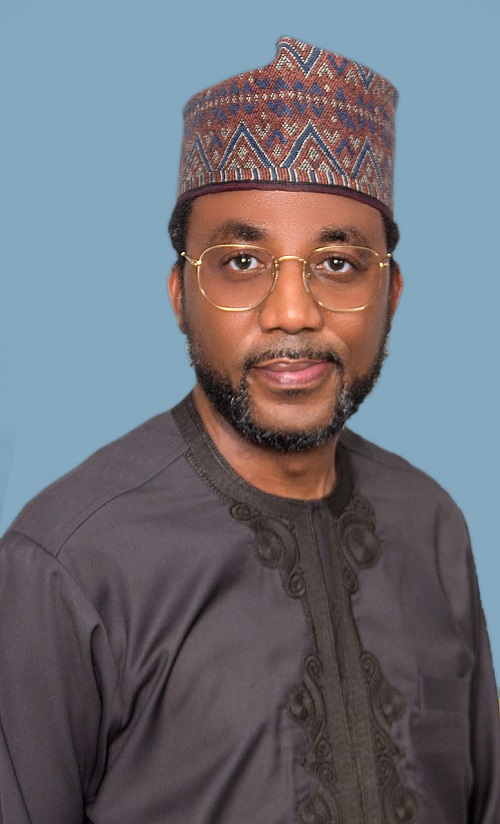
BY FRANCIS EZEM
It is a statement of fact that Mohammed Bello-Koko’s journey to the plum job at the Nigerian Ports Authority NPA, was not smooth. In fact, the entire ride could best be described as rough and tough. It was no doubt riddled with anxiety, obstacles and intrigues.
For the records, Bello-Koko was appointed Executive Director, Finance and Administration at the NPA in 2015. Following the suspension and eventual sack of the former Managing Director, Ms. Hadiza Bala Usman over some graft allegations, he was on May 7, 2021, appointed on acting capacity, being the next in rank. Expectations that he would soon be made a substantive Managing Director, which would have been the desire of any other person in that position became a serious issue.
There emerged so many conspiracy theories, political permutations and calculations, many of which turned out a figment of the imaginations of their promoters. At a point, there were reports that more than 150 Nigerians were jostling for the NPA-plum job. Some of such reports went ahead to claim that some powerful Emirs have already endorsed some of them. These reports, speculations further heightened as preparations for the 2023 general elections became full swing with the attendant rumours of concessions and horse trading.
But just like the hours that herald the dawn of a new day after a very thick darkness, the Federal Government on February 15, announced the appointment of Bello-Koko as the substantive MD of the NPA with immediate effect. This announcement, no doubt caught many off guard and therefore ended several months of speculations and permutations.
But as frightening as these developments were, Bello-Koko was resolute and very well focused on achieving results even on an acting capacity, at least judging from what could be seen around him.
Five days before his confirmation, precisely on February 10, while on an infrastructure assessment tour of the Onne Ports Complex penultimate week, he charged the workforce, especially the Port Managers on the need to be on top of their jobs as long as they are on the position.
“You Port Managers should always exercise the powers of your office. It is not for everything that you resort to the headquarters. You must do your very best at all times and any day they say we should go, we pack our bags and go but not taking action while on that seat should not be tolerated”, he had said with a mixture of calmness and firmness.
It was with this mindset, that he has from the onset prepared himself even while on an acting capacity and of course the entire management team of the NPA for the task ahead since the assumption of duty May on May 7, last year. As a team player, he was certain that achieving the new vision of the NPA would definitely not be a solo effort and so he made efforts to get everyone to buy into the new vision by organising a two-day retreat for the management staffers, who would now pass the vision down to the lowest cadre. He organised a similar retreat for the governing board and so no one was left behind.
At the retreats, Bello-Koko spared no moment in driving home his message that the new and emerging NPA is poised to create and sustain competitive advantage by offering best –in class port operations and that some success factors had been outlined by the management with a view to achieving such prospects as well as develop the capacity to garner greater market share on the continent. To achieve these, he disclosed that the management was working towards repositioning the nation’s seaports and the authority for greater efficiency, safety and accountability.
He said: “The aim of this outing is to strategise and craft smart actionable steps with a view to ensuring growth, competitiveness and future readiness of the nation’s seaport systems, which is germane.
“As part of efforts to achieve these projections, the management has identified some success factors, that in addition to promoting efficiency, safety and accountability, we would also enable the ports garner greater market share to include infrastructural renewal and expansion, the introduction of barge operations and the automation of truck transit through the electronic call up system.
“Others include improvement in the sources of revenue and collection, plugging income leakages and reducing overhead costs, elimination of monopolistic conduct, formulation and implementation of policies aimed at incentivising patronage of the Eastern Ports and encouraging competition. The management is also keeping up with the dictates of Consolidated Revenue Fund and Fiscal Responsibility Act, compliance with international best practice, elimination of red tape, boosting workers’ morale and capacity building, among others.”
To underscore the importance of the new vision, part of which is becoming Africa’s leading seaport, which he insists is achievable, and the need to craft out strategies to achieve it, the MD cited the seminal words of Organisational Behaviours expert, Professor Lee Bolman, which says: “A vision without strategy remains an illusion.” With these admonitions, it was obvious the NPA workforce was turbo charged for the work ahead.
Little wonder the milestone achievements recorded in the first six months albeit in acting capacity. With the rebooting of the electronic call-up system for haulage trucks also called ‘eto’, the seemingly intractable Apapa gridlock, which was for over seven years a nightmare for port users and residents in the area disappeared. This feat however did not come cheap. Prior to his coming on board, there were several reports of unwholesome practices such as mounting of illegal roadblocks, extortion by security and traffic operatives as well as outright undermining of the eto system. These reports were already there but no one took any action probably due to lack of political will but Bello-Koko knew he could not achieve his new vision of the NPA and so many of those operatives comprising Police, LASTMA, Federal Road Safety Corps and even NPA security were identified, isolated and severely punished and so others realised there was a new sheriff in town and it could not be business as usual. Clearing the port access roads of illegal structures under the NPA operation green initiative as well as barring rickety trucks without the minimum operating standards helped a great deal in eliminating the gridlock. In addition to this, he ensured strict adherence to the policy of establishing of holding bays for empty containers by shipping companies and evacuation of at least 80per cent of laden containers from the empty stock. The recent donation of 24-traffic monitoring bikes only serves as a booster.
He also streamlined barge operations with the strict implementation of Standard Operating Procedure SOP for movement of cargo through the barges.
Even for the most cynics, Bello-Koko has proved himself a pace setter, setting new records. He is reputed to be the first Executive Director, who became an acting MD and went ahead to emerge a substantive Managing Director, I stand to be corrected. For those that believe in destiny, he has been programmed to become one even before the colonial government established the seaports in Nigeria. You will also agree with me that his handling of the Apapa gridlock, which had for several decades been an albatross not only for the seaports but other business outlets and even humans was historic and phenomenal.
In terms of remittances to the Consolidated Revenue Fund CRFN, he set new records when the NPA under his watch within six months remitted N89.9billion despite the impact of COVID-19 pandemic, which disrupted global trade and supply chain logistics. The authority within the review period also reduced its operating cost comprising employees’ benefits, pension costs, towage services, supplies, repairs and maintenance as well as other administrative overheads by over N10.39billion, which represents 85per cent reduction. With the setting up of dedicated export terminals across port locations, the Bello-Koko -led management had made quantum leap into complementing Federal Government’s economic diversification policy through promoting non-oil exports.
Realising the crucial role played by modern infrastructure in achieving port efficiency, the management under his watch has paid priority attention to infrastructural development and renewal. The recent remodeling of the Apapa Control Towers is one of the many of such projects. Currently, the authority has made budgetary approvals in the 2022 fiscal year for the rehabilitation of Roads D and E, which are the two major arteries within the Onne Ports Complex, this is sequel to the approval by the Federal Executive Council FEC. He has in the last eight months approved incentives for both shipping lines and cargo owners to boost patronage of the eastern ports. The ports in the eastern corridors have also been major beneficiaries of the infrastructural renewal agenda. The commencement of work at the collapsed berths at Bua and PTOL Terminals at the Rivers Port, Port Harcourt are cases in point. The MD is also making efforts toward the automation of the nation’s ports systems, especially with the introduction of its Single Window, electronic invoice and payment system for the vessels that call at the ports. The list is endless.
Only recently, Minister of State for Transport, Senator Gbemi Saraki, while speaking at a stakeholders’ forum in Port Harcourt to sensitise them on the need encourage patronage of the eastern ports was full of praises of the NPA management under Bello-Koko.
She said: “The government and its agencies are making efforts to make the ports more efficient for all stakeholders. In the interim, the Ministry of Transport is working on a Port Community System and an aspect of the Single Window platform being promoted by the Nigerian Ports Authority in collaboration with relevant agencies and other technical partners and the technical buy-in of the International Maritime Organisation IMO.
“The Port Community System exclusively focuses on the speed in terms of logistics from the arrival of the vessels to the delivery of the cargo to the stakeholders.”
No gainsaying that having done all these while on acting capacity, it is only expected that his recent confirmation as a substantive Managing Director would provide additional springboard to fully deliver on his new vision for the port industry. What he probably needs in addition is the support and cooperation of all stakeholders both in and out.


Leave a Reply