


Customs, Navy, others move to curb petroleum products smuggling
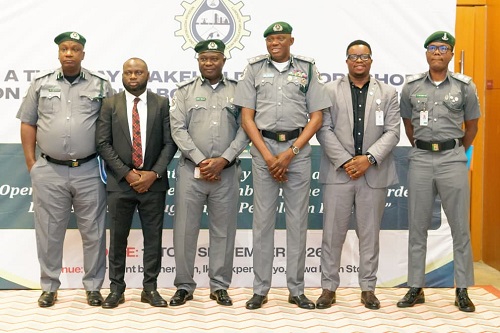
The Nigeria Customs Service, through its Operation Whirlwind Taskforce, the Nigerian Navy, the Nigerian Midstream and Downstream Petroleum Regulatory Authority NMDPRA, in collaboration with the Office of the National Security Adviser ONSA, have strengthened their commitment to enhance inter-agency collaboration as part of measures to curb the diversion and cross-border smuggling of refined petroleum products, especially Premium Motor Spirit PMS.
This was the focus of a two-day stakeholders’ workshop held September 17-18, 2026 at Four Points by Sheraton, Ikot Ekpene, Akwa Ibom State, with the theme: “Strengthening Inter-Agency Coordination and Operational Effectiveness in Combating the Cross-Border Diversion and Smuggling of Petroleum Products.”
National Coordinator, Operation Whirlwind, Deputy Comptroller A. L. Aliyu, who presented the Nigeria Customs Service’s position, highlighted the history, operational structure, achievements and challenges of the taskforce as well as strategies being adopted to address emerging threats.
He disclosed that since its establishment in May 2024, Operation Whirlwind has intercepted over four million litres of petroleum products, recorded 675 seizure reports, intercepted 75 trucks, and seized 155,000 25-litre jerry cans and 1,254 drums, with a total estimated Duty Paid Value of ₦3.6 billion.
The Deputy Comptroller also highlighted the roles of intelligence, legal and geospatial units in strengthening enforcement and accountability.
The Nigerian Navy and NMDPRA participated as key stakeholders, reinforcing the workshop’s emphasis on joint intelligence sharing, coordinated operations and effective regulatory response.
The Customs presentation identified sophisticated smuggling networks, porous borders, difficult terrain, limited surveillance assets and attacks on operatives among the challenges confronting enforcement.
A highpoint of the event was the recommendation by stakeholders for enhanced personnel training, intelligence-led operations, deployment of drones and other modern technologies, improved logistics, stronger prosecution, public awareness and sustained inter-agency collaboration, among others.


Leave a Reply