


Facts and figures on World Bank ranking of Nigeria’s seaports
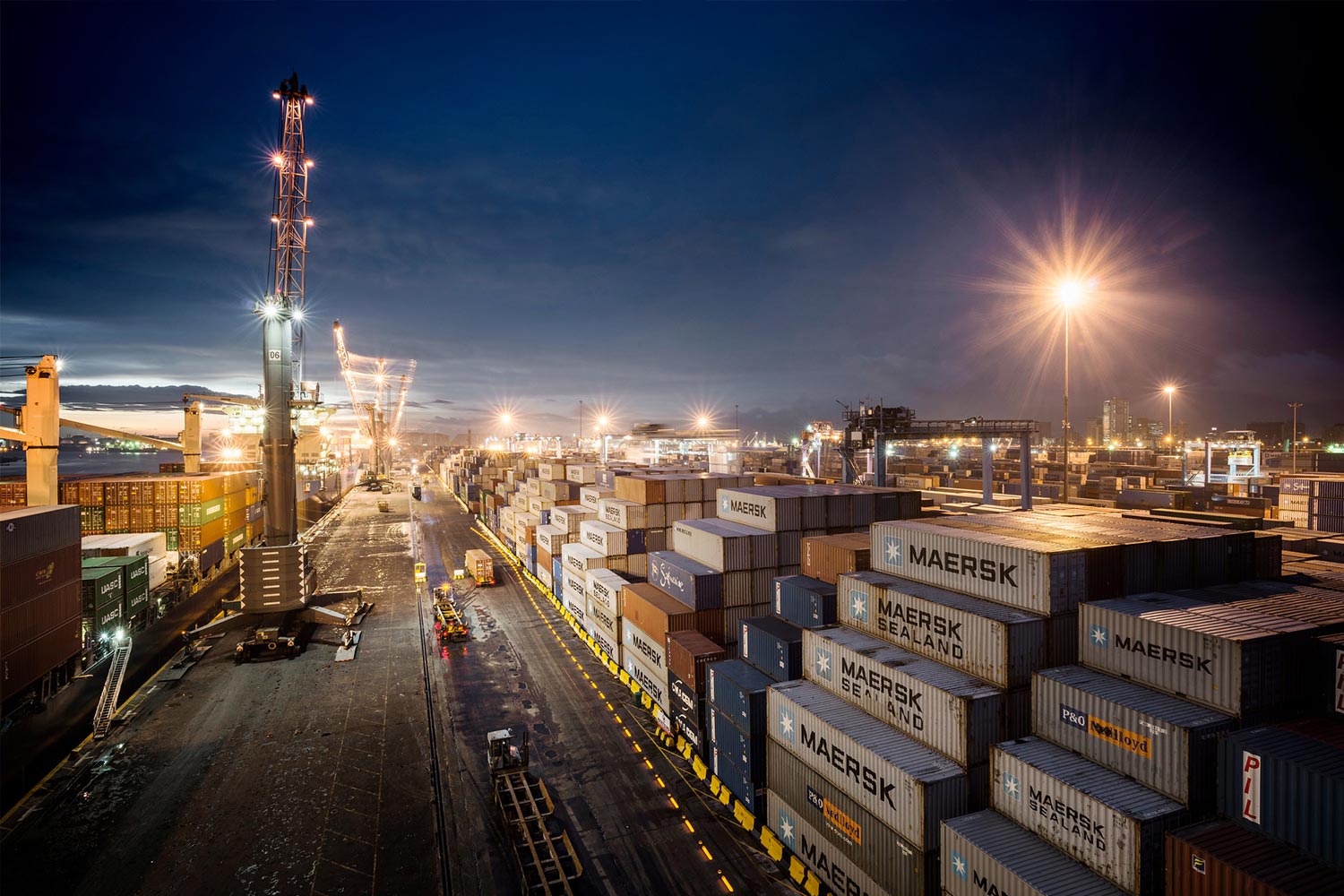
APM Terminals, Apapa Ports, Lagos.
The World Bank recently released its 2025 global ranking for seaports, listing Nigeria’s Apapa and Tin Can Island Ports both in Lagos among the top 20 in the world. This ranking, no doubt, came on the heels of painstaking reforms and innovations under the Port Modernisation Programme being implemented by the Nigerian Ports Authority NPA, under the supervision of the Minister of Marine and Blue Economy, Adgboyega Oyetola. The programme encompasses infrastructure upgrade, automation, digitisation, and human capital development, among others, which altered the facts and figures about the country’s seaports, reports Francis Ezem.
The World Bank in its Container Port Performance Index CPPI, 2025, released in June this year, ranked Apapa and Tin Can Island Ports among the top 20 most improved seaports in the world in the last five years. The World Bank’s CPPI, is a globally recognised benchmark that provides a consistent, data-driven assessment of seaports’ performance based on vessel turnaround, among other factors.
According to the CPPI 2025 report, both Nigeria’s seaports were listed in the top 20 port improvement category, which underscores the remarkable gains recorded in operational efficiency and turnaround time of vessels.

The brains behind the Port Modernisation Project: Minister of Marine and Blue Economy, Dr. Adegboyega Oyetola (left) and Managing Director, Nigerian Ports Authority NPA, Dr. Abubakar Dantsoho.
It is however, a well- known fact that prior to 2023, these two seaports were at their lowest ebb in terms of every performance index that measures the viability of a seaport in relation to cargo throughput, vessel turnaround time, cargo dwell time as well as the level of cost and ease of doing business. This was primarily due to the dilapidated and obsolete port infrastructure, manual and cumbersome cargo handling processes occasioned by the lack of automation, digitisation and poorly equipped, ill motivated human capital.
For instance, available statistics show that before now, though Nigeria controlled more than 60 per cent of West Africa’s Gross Domestic Product GDP, due to her market size, only 25 per cent of regional cargo passed through her seaports. Similarly, the country lost over 56 million metric tonnes of cargo in eight years (2014-2022). This is in addition to losing over N130 billion annually in Customs revenue.
Additionally, in terms of regional competitiveness, Apapa Port, established nearly 100 years ago with about 13- metres of draught and Tin Can over 50 years ago with about 11-meters of draught could not compete with the Port of Lomé (Togo), which has 16.6 meters of draught with two million Twenty Equivalent Units TEUs (2m TEUs) of cargo as at 2024 and a nine-day cargo dwell time, ranking 92nd globally.
Also, statistics show that Port of Tema (Ghana), has a 16 meter+ draught and operating an automated scanning system, ranking 100th globally.
Conversely, Apapa, Port, which is nearly 100 years old and Tin Can Island Port, which is over 50 years old with infrastructure that is beyond useful life, cargo dwell time stood between 18–21 days; representing 475per cent above the four-day global benchmark.
Available figures also showed that port charges at both Nigeria’s seaports stood between 30–40 per cent higher than their regional peers of Lomé and Tema.
According estimates by Dynamar, in Apapa Port alone, stakeholders lost $55million annually due to congestion costs, as shipping lines diverted their vessels to Lomé, Cotonou and Tema Ports, thus denying Nigeria revenue.
It was further learnt that due to the zero automation level at both seaports then, the Nigeria Customs Service relied on 100 per cent manual cargo inspection, which had overreaching negative effects on their operations and global rating, one of which was Apapa Port’s absence from Lloyd’s List of global top-100 rankings since 2016, among others.
It was in a bid to reverse this ugly narrative that the Nigerian Ports Authority NPA, under the supervision of the Minister of Marine and Blue Economy H.E. Dr Adegboyega Oyetola embarked on an ambitious $1billion port modernisation project, especially for Apapa and Tin Can Island Ports.
The port modernisation project focused on both modernising physical port infrastructure and automation and digitisation of port operations, which prompted the launch of NPA’s Port Community System PCS, and further facilitated the eventual introduction of the country’s National Single Window NSW, platform, which has provided a unified digital interface across all port stakeholders.
This comprehensive port modernisation project is designed to overhaul ageing infrastructure, deepen berths, rehabilitate quays, expand cargo-handling capacity, and deploy advanced digital solutions across Nigeria’s port network
Speaking on the ongoing reforms when he made a power point presentation entitled: ‘Port Modernisation: Its Impact on the Maritime Industry’, at a recent stakeholder engagement in Lagos, Managing Director/CEO of the Nigerian Ports Authority NPA, Dr. Abubakar Dantsoho, noted that the port modernisation project has reversed most of the ugly narratives, which culminated in the ranking of Apapa and Tin Can Island Ports among the top 20 most improved seaports in the world in the last five years by the World Bank’s latest CPPI.
“Nigeria loses over ₦1 trillion yearly to a lack of port automation and modern infrastructure, as congestion, delays and administrative rigidities increase logistics costs and discourage shipping lines.
“Without these reforms, Nigeria’s 60per cent of West Africa GDP advantage remains uncaptured. So one can conveniently say with every sense of modesty that these reforms have reversed those negative narratives about Nigeria’s seaports”, the Managing Director said.
He further argued that the World Bank ranking of Nigeria’s two oldest seaports; Apapa and Tin Can Island Ports came on the heels of the NPA’s pivotal role in sustaining Nigeria’s trade surplus, as available statistics show that through enhanced efficiency and improved seaport operations, the NPA has continued to provide the platform for Nigeria’s attainment of trade surpluses since 2024.
Recall that statistics from the National Bureau of Statistics NBS, showed a trade surplus of ₦7.54 trillion in Q1, of 2026, highlighting the strategic importance of the nation’s seaports to economic growth and international trade.
He further attributed the feat to the investor-friendly policies of President Bola Ahmed Tinubu and the support of the Minister of Marine and Blue Economy, H.E. Dr. Adegboyega Oyetola.
“With the investor-friendly policies of the current government, providing the impetus for increased investment to drive the port infrastructure and equipment modernisation programme, coupled with the unflinching support of the Minister, we have all it takes to further enhance trade facilitation, improve competitiveness and boost the national economy”, Dantsoho said.
Other port statistics also show that the country’s cargo throughput for 2025 recorded an exponential +24.8 per cent growth, which has been described as the ‘most significant in Nigeria’s maritime history’.
Other operational statistics for 2025 show that while imports continue to dominate overall cargo traffic, the report highlights a steady rise in outward trade, with exports accounting for 39.0 per cent of total cargo throughput. Inward traffic represented 59.2 per cent, and transshipment contributed 1.8 per cent.
Analysts view the growth in non-oil export volumes as a direct validation of the automation of export processes, which is in line with Federal Government’s economic diversification initiatives, aimed at reducing dependence on crude oil and promoting non-oil sector exports.
Containerised cargo, a key indicator of non-oil export trade activity, grew significantly. Total container traffic increased by 25.7 per cent, surpassing 2.1 million Twenty-foot Equivalent Units (TEUs). Of this, export containers grew by 3.1 per cent, while import-laden containers surged by 32.8 per cent. The report also noted a remarkable 205.8 per cent increase in transshipment containers, signalling Nigeria’s emergence as a pivotal regional logistics and trade hub.
The report identified Lekki Port as the leading port in Nigeria, handling 40.6 per cent of the nation’s total cargo throughput. Onne Port followed with 19.1 per cent, and Apapa Port handled 16.7 per cent.
In addition to volume, Lekki Port attracted the largest vessels, with an average Gross Registered Tonnage GRT, of 55,712, slightly higher than Onne Port at 53,022 GRT. Apapa and Tin Can Island Port received ships averaging 33,251 GRT and 36,909 GRT, respectively, while Delta Ports handled vessels averaging 17,414 GRT.
The report underscores a structural shift in vessel traffic: although Tin Can Island Port recorded the highest frequency of ship arrivals accounting for 22.7 per cent of total ship calls, Lekki and Onne are increasingly receiving the industry’s “heavyweight” vessels, enhancing Nigeria’s capacity to handle larger, more valuable cargoes.
Overall, total ship calls rose by nearly 12 per cent to 4,477 vessels, reflecting broad-based growth across all operational metrics. Liquid bulk cargo, including fuel and chemicals, remained the dominant commodity at 54.7 per cent, while containerized cargo accounted for 24 percent. Analysts note that the increasing size and sophistication of vessel traffic, coupled with container growth, points to a maritime sector gradually aligning with global shipping standards.
The report also highlights the rising importance of transshipment cargo, particularly for containerised goods destined for other West and Central African ports. The 205.8 per cent surge in transshipment containers positions Nigeria as a strategic regional hub, attracting international shipping lines and increasing revenue for the Nigerian Ports Authority.
According to the Managing Director, “The 2025 NPA Operational Performance Report signals a transformative phase in Nigeria’s maritime industry. Export-led growth, rising container traffic, and the strategic role of Lekki Port illustrate that the nation is not only handling more cargo but is also diversifying the type of goods moving through its ports.
“This is a pivotal moment for Nigeria’s trade ecosystem,” maritime analysts said. “The growth in exports and transshipment reflects the success of policy reforms aimed at reducing reliance on oil revenues, while enhancing the competitiveness of Nigerian ports in regional trade.”
With the nation’s ports showing resilience and dynamism, the report reinforces the Federal Government’s efforts to expand non-oil exports, attract investment into port infrastructure, and integrate Nigeria more fully into global supply chains.
It is expected that as Nigeria continues to welcome larger vessels and diversify its cargo base, the 2025 NPA report positions Lekki Port and the broader port network as central to the country’s economic diversification strategy, regional trade prominence, and global maritime ambitions.
Operational records for Q1 2026, show that NPA’s revenue rose from ₦894.86billion in 2024 to ₦1.28trillion in 2025 with a target of ₦1.489trillion in 2026.
The NPA-boss, who reacted to the 2026 Q1 report, noted that the Authority’s operations are central to these achievements, insisting that the trade surplus of ₦7.54 trillion recorded in the first quarter of 2026 signposts the strategic importance of the seaports to the nation’s economy.
Going forward, Dantsoho projects that the next phase of growth will be further driven by the ongoing bold port modernisation programme and the implementation of the National Single Window system.
The initiative is expected to improve vessel turnaround time, reduce cargo dwell time, enhance safety standards, and significantly boost operational efficiency across all terminals.
Dantsoho said: “In addition to the modernisation of physical port infrastructure, launch of NPA’s Port Community System PCS in the first quarter of 2026, which facilitated the introduction of the National Single Window NSW, platform, has provided a unified digital interface across all port stakeholders laid the ground plan for these successes.
“The electronic truck management system; the Eto truck call-up system, which is part of the port network automation and digitisation, has drastically reduced Apapa gridlock, having to manage a road designed for 2,400 trucks daily but, which currently receives over 7,000 trucks daily.
“The NPA would continue to play its strategic roles under the Land Lord Port model of developing, owning and operating ports and harbours across Nigeria’s coastlines, providing safe navigable channels and Vessel Traffic Services VTS.”
The NPA helmsman also pledged to effectively regulate terminal operations, concessionaires and port service providers, drive infrastructure investment through Public, Private Partnership PPP, and direct capital programmes. This is in addition to leading maritime digitisation; as seen in the rollout of the NSW, PCS, Eto electronic call-up as well as ensure safety, security through the implementation of the International Ships and Ports Security ISPS, Code and environmental compliance.
Overall, stakeholders expect that the port modernisation initiative would progressively improve vessel turnaround time, reduce cargo dwell time, enhance safety standards, and significantly boost operational efficiency across all terminals.


Leave a Reply