


Maritime Hub: NPA moves to upgrade port infrastructure…Seeks alternative funding sources
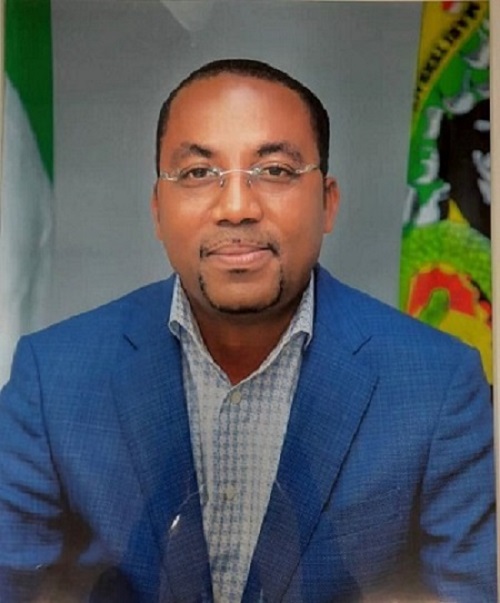
As part of measures to attain a maritime hub status for West and Central African region, the Nigerian Ports Authority NPA is exploring smart ways to boost its revenue performance in order to upgrade the country’s existing port infrastructure.
Under the new initiative, the management of the authority has commenced talks with some multilateral financial institutions, notably; the French Development Agency AFD, African Development Bank AfDB, European Investment Bank EIB and Sanlam Infraworks (a Central Bank of Nigeria -approved fund manager for (InfraCorp).
These are parts of efforts to access long term low interest credit to enhance port infrastructure upgrades and expansion, which are crucial elements in the authority’s desires to make Nigeria’s seaports attain a regional hub.
Acting Managing Director of NPA, Mohammed Bello-Koko, who made these disclosures, spoke at the maiden retreat organised by the agency for the reconstituted Board of Directors with the theme: “Expanding the Frontiers of Service Excellence” which held in Abeokuta, the Ogun State capital at the weekend,
He also disclosed that these smart ways to boost revenue had become expedient, especially given urgent need for port infrastructure expansion and upgrade for sections of the quay aprons at the Tin Can Island Ports Complex, Apapa, Onne, Delta and Calabar Ports, which require huge funds.
It was also gathered that these moves were further necessitated by the increasing obligation for the authority to statutorily remit more revenue to the Consolidated Revenue Fund CRF of the Federation, which makes it difficult for it to have sufficient funds to attend to these infrastructural gaps, hence the need to explore alternative funding sources outside the traditional port service offerings.
He argued that authority would leverage Nigeria’s status as Africa’s biggest economy to actualise the country’s maritime hub status in the region, through investments in modern deep seaports that would attract very large merchant vessels with the attendant multiple socio-economic benefits as well as boost port revenue performance.
The MD however noted that management would need the support of the Board to drive the process of alternative revenue sources to actualise the lofty aspirations of the authority, adding that NPA is blessed with prime real estate which could serve as alternative funding sources outside the regular budget.
He further observed that NPA has a lot of high value landed property in Onne, Snake Island, and Takwa Bay that are designated Free Trade Zones and mostly allocated but regretted that these facilities have poor arterial road networks and other infrastructure to make them attractive for private investments, which would bring good revenue to the authority and the Federal Government.
Speaking on the new direction and measures being put in place to actualise the authority’s aspirations, the acting MD explained that a lot has been done, especially in the last few months to resolve most of the identified constraints to efficient movement of cargoes to and from port locations.
“Nigeria accounts for about 70 per cent of cargo imported into West and Central Africa and the country controls an impressive stretch of the Atlantic Ocean. Nigeria’s rich aquatic endowments and her border with landlocked nations makes development of deep seaports a huge potential revenue earner for the nation.
“The move towards earning the status of hub in the region is in line with our new vision statement which was adopted at the recent NPA management retreat, “To Be The Maritime Logistics Hub For Sustainable Port System In Africa”, he said.
While describing the board retreat as very timely, he stated that it signposts a unity of purpose and shared vision, where the executive management working closely with every section, unit, department, division and directorate, embrace an all inclusive strategic outcomes for the authority with the requisite buy-in of the board.
“In appreciation of this, I will like to crave the understanding of the Board with regards to executive management’s limitations in actualising some of our goals and objectives, which I am sure distinguished board members must have noticed in the course of the tour of ports that preceded this retreat” he added.
The acting NPA boss had informed the board that recent interventions made by the Authority has led to significant improvement in terms of ship and cargo dwell time at the port. He however, explained that “some of the benchmarks we are yet to achieve are dependent on externalities and variables that require concerted inter-agency actions, which the authority, despite dogged efforts is yet to optimally achieve owing to systemic administrative constraints and bureaucracy, including conflicting directives from the agencies operating within the port value chain and reporting to different supervising Ministries with jurisdictional overlaps and duplication of functions.
He further informed the board that concerted efforts are being made to expand the revenue streams of the Authority, in addition to revenue from traditional port operations. According to him, “unlike the practice in our sister francophone countries where government funds dredging of ports, we are responsible for funding ours which put a lot of strain on our resources and capacity to invest in critical port infrastructure.
Bello-Koko also touched on efforts by the Management to make Nigerian seaports more business friendly. In his words, “we have been able to deploy technology to address the perennial traffic gridlock that has been frustrating the conduct of business around the Lagos ports corridor. A software application code named “eto” is gradually restoring sanity to trucking business despite the initial teething problems and resistance by vested interests hitherto profiting from the chaos.
The Authority has accredited 33 private truck terminals within the Lagos area, in addition to the Lilypond Truck Transit Park and Tin Can Island Port Truck Transit Park, to ensure trucks do not park indiscriminately on the access roads and would only be allowed to transit to the port after obtaining electronic tickets via the “eto” call-up platform.
The Authority is collaborating with the Lagos State Government to ensure enforcement and compliance with the e-call up system, he said.
Other solutions being implemented is the push to link all seaports to the national rail network as well optimise the use of the inland waterways through the transfer of cargo or containers via barges.
Currently, the Authority is streamlining barge operations to ensure efficiency, safety and cost effective cargo delivery for increased port revenue.
The acting Managing Director in his remarks equally acknowledged recent steps taken by the Ministry of Transportation and the Authority towards the timely execution of the new green-field deep seaport to be domiciled in Bonny, Rivers State.
The Bonny Seaport project, boosted by two major railway projects, would massively transform the economic landscape of the country, particularly the South- South and South Eastern regions.
Meanwhile, on the South Western axis is the Lekki Deep Seaport which should be operational next year.
The two port projects will usher a new vista of economic prosperity and further consolidate the country’s status as gateway to the African economy, he noted.
Earlier in his welcome address, Chairman of the Board, Mr.Emmanuel Adesoye FCA, described the retreat as an opportunity for the Board and Management “not just to rethink our strategies, structures and systems for effective service delivery, but also to unwind, reconnect and strengthen our bonds as team players committed to upholding excellence”, he remarked.
The Chairman called for clear and deliberate efforts by the NPA towards efficient operations, competitive and diversified export driven economy; a strong and incentive based system aligned with win-win relationships to enhance profitability and productivity for the concessionaires, NPA, and the Nigerian State; increase in alternative revenue streams; and effective collaboration based on transparency and constant communication with all relevant stakeholders across the port value chain.
The three- day event, attended by all board members, also attracted seasoned experts in port administration, strategic and creative thinking, stress management, among other relevant subjects. Two former NPA’s CEOs namely Chief Adebayo Sarumi, and Mr. Felix Ovbude, gave presentations on their experiences and ideas as port administrators. Former General Manager Operations, Mr. Joshua Asanga gave a presentation on “Ways to improve port operations towards a world -class port administration”, among others.


Leave a Reply