


NIMASA attributes declining piracy to synergy…Says GMDSS fully operational
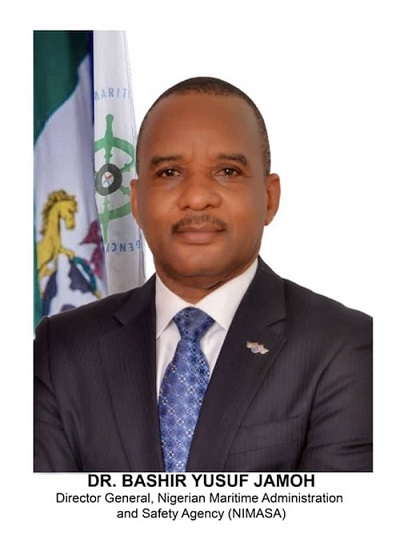
The Nigerian Maritime Administration and Safety Agency NIMASA has aattributed the sharp decline of incidences of piracy and other crimes on Nigeria’s waters and the Gulf of Guinea to collaboration among various organs of the Federal Government of Nigeria, governments in the region and stakeholders from within and outside the country.
The agency has also disclosed that the fight against piracy and other maritime crimes in the country has received a further boost with the deployment of its Global Maritime Distress Safety System, GMDSS, which is now fully operational.
Speaking while receiving the management of the Nigerian Television Authority, NTA Channel 10, Lagos, Director General of the agency, Dr. Bashir Jamoh, noted that the success in fighting piracy in Nigeria remains a combination of many factors, which have seen the entire gamut of security architecture in Nigeria working together to achieve a common goal.
“Our joy is that Nigeria has exited the piracy list and the progress is steady. No single organisation can lay total claim to this success. The Presidency is playing a major role by providing direction, the armed forces are playing their roles as enshrined in the constitution, and NIMASA is playing its role by being an effective Maritime Administration with the Deep Blue Project as a focal tool. The National Assembly which gave us the Suppression of Piracy and other Maritime Offences SPOMO Act 1999 and the Judiciary which has now ensured maritime crimes are punished in Nigeria should also take the credit”, he said.
Jamoh also acknowledged the support from the international maritime stakeholders as key to the success in the fight against piracy in the Gulf of Guinea”. According to him, the international conglomerates, including the major oil marketers, International Tanker owners, INTERTANKO, and the International Cargo Owners, INTERCARGO amongst others who are part of the joint industry-working group, which has now metamorphosed into the SHADE Gulf of Guinea, also deserve some credit.
It was however gathered that two of the agency’s Global Maritime Distress Safety System, GMDSS, located at the Regional Maritime Rescue Coordination Center, RMRCC in Kirikiri Lagos and Takwa Bay are now fully functional.
He said:” We have greatly enhanced the safety of navigation of vessels on our waters, every vessel within the Nigerian territorial waters and even beyond can easily access our GMDSS. The ones in Takwa Bay and Kirikiri are now fully functional, while the other three stations located in Oron, Bonny and Escravos are almost ready to commence full operations. These are some gaps identified in the Nigerian Maritime Administration and Safety Agency by the IMO during its last IMO Member State Audit Scheme (IMSAS) and we are closing these gaps.”
Commenting on the SPOMO Act, which now serves as a model for other countries in the region, the DG noted the need for harmonisation of laws to ensure uniformity of purpose in prosecuting maritime offences within the region.
“Other countries in our region are now in the process of enacting laws similar to our SPOMO Act. This is the time for us to ensure harmoniSed Maritime Laws in the Gulf of Guinea to ensure criminalities in the maritime sector are prosecuted easily within the region, thus no safe haven for criminals in the region”.
Jamoh also noted that NIMASA decided to engage the Naval Dockyard to repair the Agency’s patrol boats as part of efforts to deepen inter-Agency collaboration with the Nigerian Navy.
Earlier, leader of the delegation and the General Manager, NTA Channel 10, Engr. Olusegun Osinowo commended the efforts of the Jamoh-led administration in its quest to realise a robust maritime sector, while also pledging the continuous support of the media in educating the public on the activities of the Agency. “With this feat, it is evident that President Buhari did not make a mistake in his choice of appointing the DG of NIMASA”, he said.


Leave a Reply