


Why War Risk Insurance Premium on Nigeria’s imports may persist-Report
Strong indications have emerged that shipping lines and insurance underwriters may be most reluctant to scrap the War Risk Insurance Premium imposed on all Nigeria-bound imports about three years ago in reaction to the rising incidents of piracy and armed robbery against ships as well as other forms of criminality such kidnapping for ransom. This is despite subtle media protests by the country’s shipping authorities.
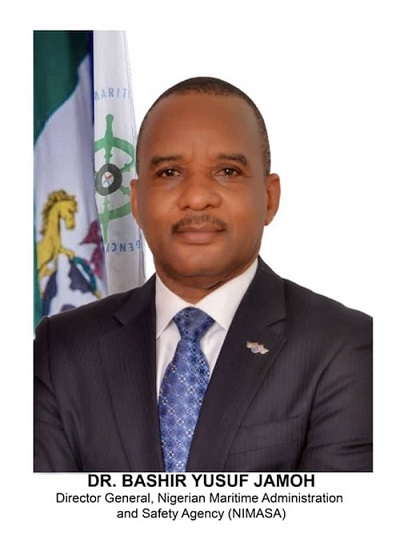
Recall that the Director General of the Nigerian Maritime Administration and Safety Agency NIMASA, Dr Bashir Jamoh had following the official launch in May, 2021 of the country’s Integrated National Security and Waterways Protection Infrastructure also called the Deep Blue Project, mounted a media campaign urging the shipping lines and underwriters to rethink the premium, citing a reduction in piracy cases since February 2021 when the security assets were deployed.
But recent reports by the Maritime Safety Committee MSC, of the International Maritime Organisation IMO published Monday indicate that though the number of incidents in the Gulf of Guinea (West Africa), which Nigeria accounts 60per cent of decreased in the first half of 2021 by five compared to the same period in 2020, which represents a decrease of 16per cent, the region still accounts for the highest incidents of piracy in the world.
According to the report, a total of 83 incidents of piracy and armed robbery against ships were reported in the first six months of 2021, which indicates a decrease of approximately 23per cent at the global level compared to the same period last year.
A breakdown of the committee report shows that Gulf of Guinea still accounts for the highest acts of piracy and armed robbery during the period with 27 cases out of 83 cases across the world. The region is closely followed by the Straits of Malacca and Singapore, which accounted for 23 incidents while the South China Sea was responsible for 12 incidents.
Additionally, the MSC gave a special commendation on the ongoing implementation of the Djibouti Code of Conduct, as amended, in the western Indian Ocean and the Gulf of Aden while no mention was made of Nigeria’s Deep Blue Project, which aims rid the Gulf of Guinea of acts of piracy.
It is on record that the Gulf of Aden region had with the support of the IMO Secretariat, established a strong governance framework to spearhead the implementation and is now better prepared to find regional solutions to address existing gaps in Maritime Domain Awareness MDA and to develop response capabilities.
The committee therefore requested member states of Aden to continue to report incidents of piracy and armed robbery against ships to the IMO Secretariat, using the reporting form and also invited them to consider making financial contributions to IMOʹs West and Central Africa Trust Fund WCA TF.
Recall that insecurity got so bad in the Gulf of Guinea region before the deployment of the deep blue project that global insurance firm Beazley now offers “Gulf of Guinea Piracy Plus,” a bespoke insurance plan for maritime crew travelling through the area. The plan provides compensation for illegal vessel seizures and crew kidnappings even in the absence of ransom demands. It tracks insured vessels on a 24-hour basis, but because the risks are so high, it limits claims to $25 million.
One of the effects of this additional spending by shippers is that it is transferred as a burden on final consumers in form of higher cost for imported goods, with the attendant inflationary trend it comes with.
Reports by Oceans Beyond Piracy, a non-profit making organisation for 2020 shows that the total cost of additional war risk area premiums incurred by Nigeria- bound ships transiting the Gulf of Guinea was $55.5 million in 2020 alone, and 35 per cent of ships transiting the area also carried additional kidnap and ransom insurance totalling $100.7 million.
Economic and financial experts believe that most of these additional costs are passed to the final consumers of the imported goods, which also contributes significantly to the rising inflationary trends in the country.


Leave a Reply