


How we grew revenue remittances to N90bn in six months-MD NPA…Boosts non-oil exports through dedicated terminals
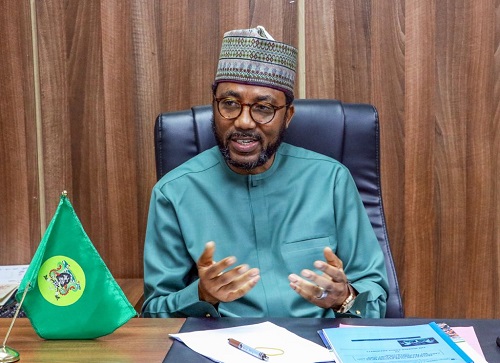
Acting Managing Director of the Nigerian Ports Authority NPA, Mohammed Bello Koko has indicated how the agency under his watch grew its remittances to the Consolidated Revenue Fund CRFN to 89.9billion, which represents a growth of 120per cent despite the impact of COVID-19 pandemic on global trade and supply chain logistics.
The authority has also been able to reduce its operating cost comprising employees’ benefits, pension costs, towage services, supplies, repairs and maintenance as well as other administrative overheads by over N10.39billion, which represents 85per cent reduction. This is in addition of the new management’s efforts to complement Federal Government’s economic diversification policy by setting up dedicated export terminals to boost the country’s no-oil export.
Speaking recently with the House of Representatives Committee on Ports and Habours recently, the MD disclosed that the NPA raised its Internally Generated Revenue IGR between January-September 2021 by 120 per cent in addition to reducing its operating expenses by 20 per cent of its budget for this year.
Details of the presentation to the committee for the period covering January-September, 2021, show that NPA earned N256.28billion in IGR as against the projected N214.65billion (approved estimate N271.70bn) for the same period, representing a performance of 120per cent or 95per cent of its total annual budget for 2021.
According to him: “For operating expenses, as at the end of September 2021, actual spending stood at N55.10billion as against the budgeted figure of N65.49bn, comprising employees’ benefits, pension costs, towage services, supplies, repairs & maintenance and other administrative overheads. This indicates a saving of N10.39billion or 85per cent performance of the approved budget of N87.32billion.
“Furthermore, in compliance with the quarterly remittance of its operating surplus to the CRF and provisions of the Finance Act 2020, the authority has remitted the sum of N62.66billion to the CRF for the year 2021 as at October 31, 2021, while a cumulative sum of N89.9bn has been transferred to the CRF in the last six months. At the current state of increased revenue drive, it is projected that the authority will exceed its 2021 revenue projections and the projected transfer to the CRF for the year 2021 which is expected to be over N80billion, which would be the highest in the history of NPA”.
It was in the light of this impressive revenue performance that industry stakeholders have lauded the Bello Koko- led management of the authority, especially given that it has been in office for only six months.
The NPA-boss also debunked insinuations in some quarters that Nigeria’s seaports are the most expensive in the sub-region, citing a study commissioned by the authority with the support of UKAid in 2019, which indicated that it is cheaper for general and container vessels to berth in Nigeria than in Ghana or Togo.
He explained that a huge chunk of what shippers or cargo owners spend to clear their consignments include terminal and freight charges paid to terminal operators and shipping companies, some of which are payments for Customs duty, inspection services, haulage, insurance and other sundry trade levies and fees, which are outside the purview of the authority.
Aside the towage dues which was reviewed in 2015, port tariffs in Nigeria have remained same since 1993, he said.
Recall that on assumption of office in May this year, the acting Managing Director had taken deliberate steps to reposition the authority to focus on cost-optimisation and quality service delivery, while maximising business value for port operators and users. These efforts primarily focused on improving the overall efficiency of the country’s seaports.
As part of measures to complement Federal Government’s economic diversification agenda through the promotion of non-oil exports, NPA entered into partnership with the Nigerian Export Promotion Council NEPC for the establishment of third party dedicated export terminals or export parks to be located in Lagos and Ogun states.
The initiative is aimed at processing, packaging and certification of export products under a one -stop platform that houses all relevant agencies responsible for quality control and regulatory validation of exports before shipment. The objective is to enhance and fast-track Nigeria’s export cargo for shipment at the export parks without any further port clearance protocol.
Available records show that a pilot project has been established at the Lillypond Container Terminal in Lagos, while 10 other export terminals are in the process of being certified in order to begin operations by 1st quarter of next year.
Investigations also show that NPA is currently consolidating its various electronic platforms under a unified port community system. These platforms, which are in use at the moment include: Oracle Financials and Human Resources Planning, Enterprise Resource Planning ERP, Revenue & Invoicing Management System (RIMS)e-Ship Entry Notice (e-SEN), Customs portal for online submission of bills, Hyperion budgeting, 3CI (Command, Control and Communication & Intelligence), Truck Call-Up Access Control and Harbours System Linked with the 3CI for harmonisation of vessel operations.

The management is planning to consolidate all the platforms into a single port community system to allow for ease of transaction and eliminate impediments associated with manual processes. It was also gathered that noteworthy that, the International Maritime Organisation IMO is providing technical aid to the authority for the development of the Port Community System.
To ensure immediate commencement of port Infrastructure & Rehabilitation, the Federal Ministry of Transportation constituted a Technical Committee with the purpose to identify the operational issues of the ports and assessing state of the existing port Infrastructure starting with the ports in Lagos. A technical consultant engaged for that study has already concluded the preliminary assessment of the ports.
The NPA is already reviewing alternative sources of long term, low interest capital for port infrastructure development by engaging reputable funding institutions like the African Development Bank, the Chinese Exim Bank and other Infrastructure Development Agencies. In addition, port terminal operators are also being encouraged to explore such windows to fund the rehabilitation of the facilities and port equipment with amortisation as an option of recouping investments. This is to ensure immediate commencement of rehabilitation of the ports and quay walls and also deeper drafts to accommodate large modern day vessels.
Also recall that the first public outing of the Bello Koko management was to rejig the implementation of the electronic call up system for trucks known as ETO. It ensured all identified lapses associated with the system were addressed, particularly breaches observed while the taskforce saddled with the responsibility of enforcing compliance was in charge. Series of stakeholder engagements were held with the top hierarchy of the Military, the Nigeria Police, other security agencies, the Lagos State Government and other critical industry stakeholders. The outcome of these engagements led to tremendous improvement in travel time along the Apapa port access roads in Lagos.
The authority in conjunction with the FMOT also reached out to the Federal Ministry of Works on the timely completion of the reconstruction of Sunrise Bus Stop to the Mile 2 stretch of the Tin Can Island Port corridor.
To complement the above, the NPA also launched “Operation Green” to remove and clear all illegal structures and shanties on the Apapa and Tincan Island Port access roads. A great deal of success was recorded by this operation as exemplified by the resultant free flow of traffic to and from the ports.
NPA is cashing on this success to embark on awareness and sensitisation of port stakeholders to drum support towards the implementation of a sustainable policy on traffic decongestion along port corridors. In this regard, the management has just acquired 24 motorcycles to be added to existing fleet and in support of continuing collaboration and operations for a better traffic management at the ports.
It is also making efforts to address identified areas of security vulnerabilities with the deployment of Electronic Access Control with Apapa and Onne Ports as pilot projects, while procurement process has commenced for the full perimeter fencing of Tin Can Island Port area to further consolidate compliance with ISPS code. Further compliance to ISPS code, especially as it relates to vulnerabilities of the ports waterfront, the management has procured 13 units of security patrol boats (SPB) ready to be deployed across all pilotage districts including the establishment of Marine Police units in Calabar and Delta Ports where none currently exists.
It is expected that this would reduce the incidents of attack on vessels around the port area and boost the confidence of the international shipping community to patronise Nigeria’s seaports.
To enhance efficient marine services, particularly monitoring and facilitation of communication with vessels, the management also rehabilitated the dilapidated Control Towers at both Apapa and Tin Can Ports and new communication gadgets have been installed to ensure prompt and effective communication with vessels coming into the port channels. This has led to significant improvement in harbour services as well as increase in port revenue. In addition, various marine equipment like Pilot Cutters, Security Patrol Boats and Tug Boats are also being deployed.
To improve cargo evacuation from the port and facilitate quick return of empty containers to the port, the Management has reviewed the modalities for registration and operations of barges. The new regulatory framework which includes a new Standard Operating Procedure (SOP) took effect from 1st September, 2021. It provides for enforcement of the safety and operational standards including the requirement to install radio communication equipment on-board to facilitate the sharing of traffic information. Furthermore, the Authority is in the process of deploying an electronic call-up system for barges, similar to the one for trucks, to streamline their operations and movements. It has approved rates for barge operations which will ensure more revenue to the government.
Similarly, the authority has supported the use of privately managed jetties as part of measures to optimise inland barge services at the port. This has encouraged barging as a mode for the promotion of inter-modal transportation. The use of barges has taken some pressure off the roads. The movement of cargo by barge this year alone has recorded well over 200,000 TEUs. This has also generated huge employment opportunities; in stevedoring, terminal operations and other marine services. It also becomes another revenue stream to the authority in particular and government in general.
To address the menace created by trucks carrying empty container and to ensure that Nigeria is not made a dumping ground for empties, the authority began to enforce the return of empties, where vessels are compelled to ship back at least 80per cent of the number of imports shipped in.
To guarantee safety of records and documentation, the NPA Management recently commissioned an ultra-modern and fully digitalised archival system of document preservation and storage.
From May till date, the Bello-Koko led Management has managed to steady the ship by running an inclusive style of administration along with regular consultation with relevant agencies of government and trade groups operating in the port.
Little wonder that the current NPA leadership has won plaudits from industry stakeholders for focusing on costs optimization to shore up revenue accruable to government, exploring alternative funding sources to address ageing port infrastructure and reposition Nigeria as hub for maritime trade in Africa.
Feelers from the new administration as the year winds down is that all hands are on deck to ensure that the NPA remains a veritable and profitable national asset, even as the Bello Koko led management continues to shore up its responsibilities to customers under a business friendly port system, while security would remain a top notch.


Leave a Reply